Overview
Upgrades — also called hop‑ups — are performance parts that improve reliability, handling, and efficiency. This guide explains which upgrades are worth doing, which aren’t, and how much you can expect to spend.
Core Upgrade Categories
- Bearings → replace bushings with ball bearings for smoother drivetrain and longer life.
- Shocks → oil dampers give consistent handling compared to friction shocks.
- Tyres/Wheels → surface‑specific tyres are the biggest factor in grip.
- Steering → alloy arms and stronger servo savers improve precision.
- Electronics → transmitter, servo, ESC, and motor upgrades transform control and response.
Worth Doing vs Not Worth Doing
Worth Doing:
- Bearings
- Oil shocks
- Tyres & Wheels
- Steering
- Servo upgrade
- Quality transmitter
Not Worth Doing:
- Alloy “bling” with no performance gain
- Oversized motors that stress drivetrain
- Gimmick parts with no measurable benefit
Bearings vs Bushes
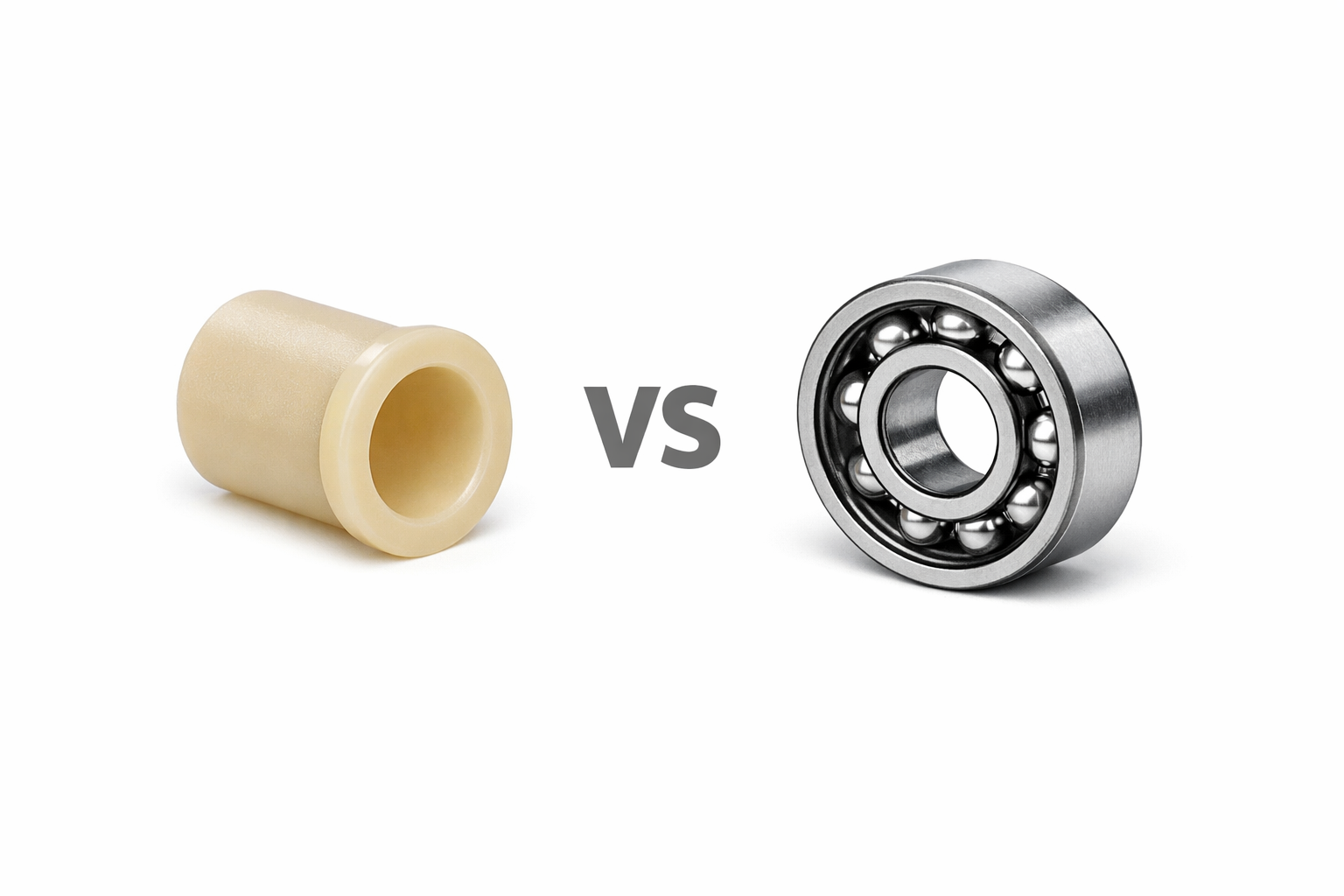
Replacing plastic bushings with a full set of ball bearings is one of the most impactful upgrades you can make to any Tamiya chassis. Plastic bushings create drag because the shaft has to slide against the plastic every time it rotates.
As the bushings wear, they deform, absorb dirt, and generate even more friction. This slows the drivetrain, reduces efficiency, and accelerates wear on gears and shafts.
Shocks
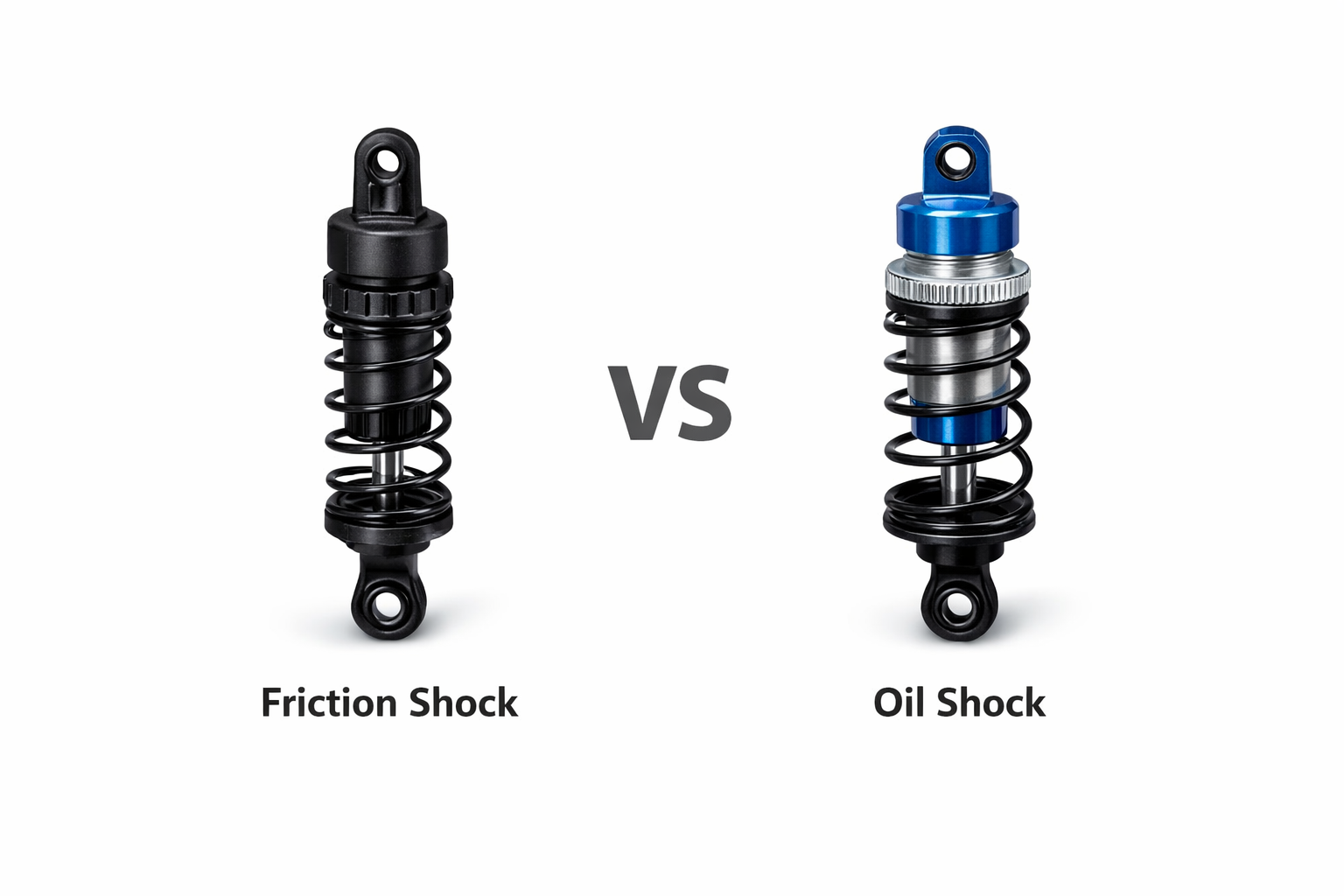
Switching to oil‑filled dampers transforms how an RC car behaves on every surface. Friction shocks rely on plastic‑on‑plastic resistance, which changes as the suspension moves, heats up, or gets dirty. This creates inconsistent grip, unpredictable rebound, and a car that can bounce, skip, or roll unexpectedly.
Oil‑filled shocks use silicone damping fluid to control how quickly the suspension compresses and returns. The oil flows through precision‑machined pistons, giving smooth, repeatable damping that stays consistent lap after lap.
Tyres/Wheels
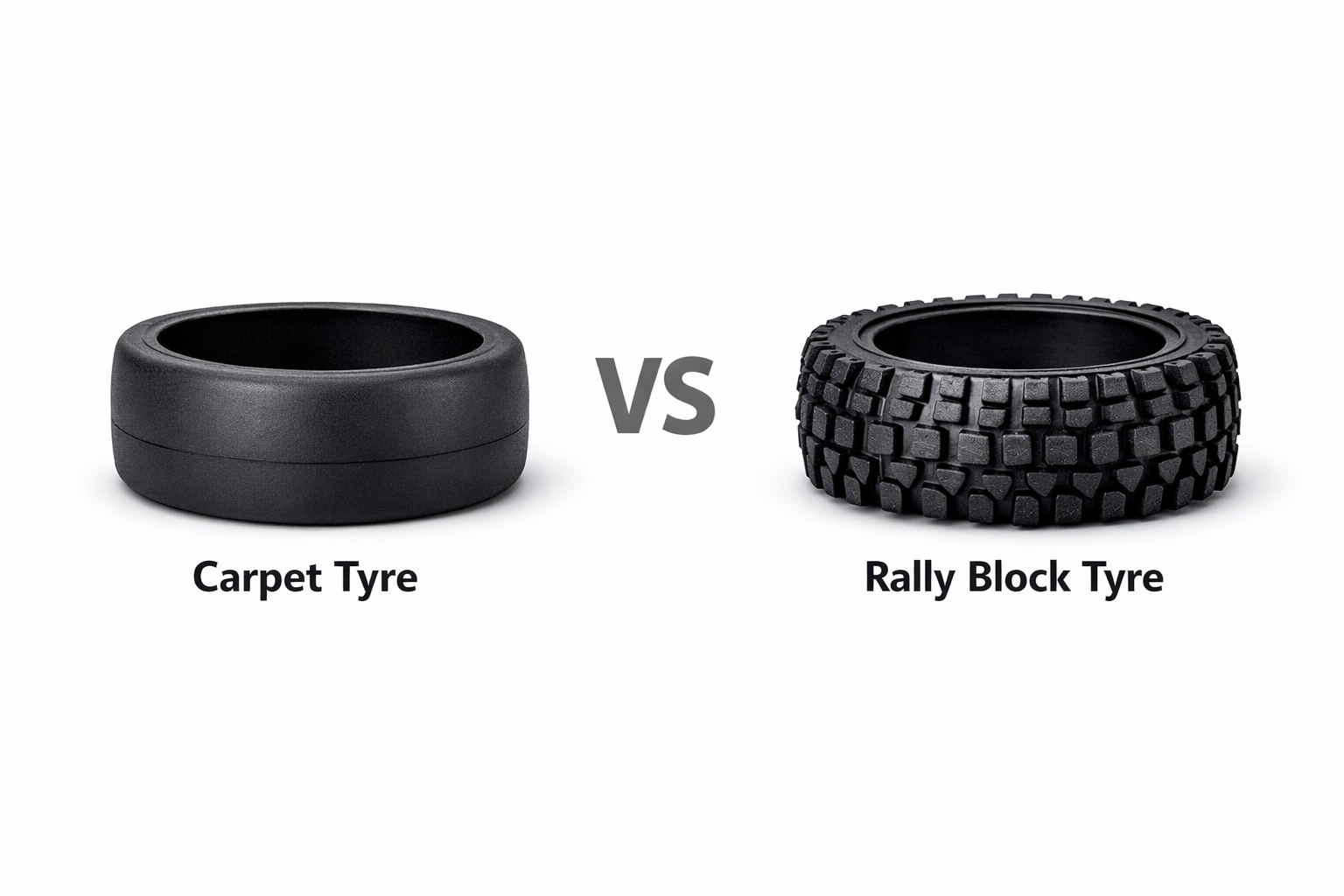
Tyres are the single most important component in determining how your RC car handles. Even with perfect suspension, gearing, and electronics, the wrong tyre compound will make the car feel unpredictable, slow, or unstable.
Grip comes from the interaction between the tyre and the surface, so choosing the correct compound and tread pattern is essential.
Steering
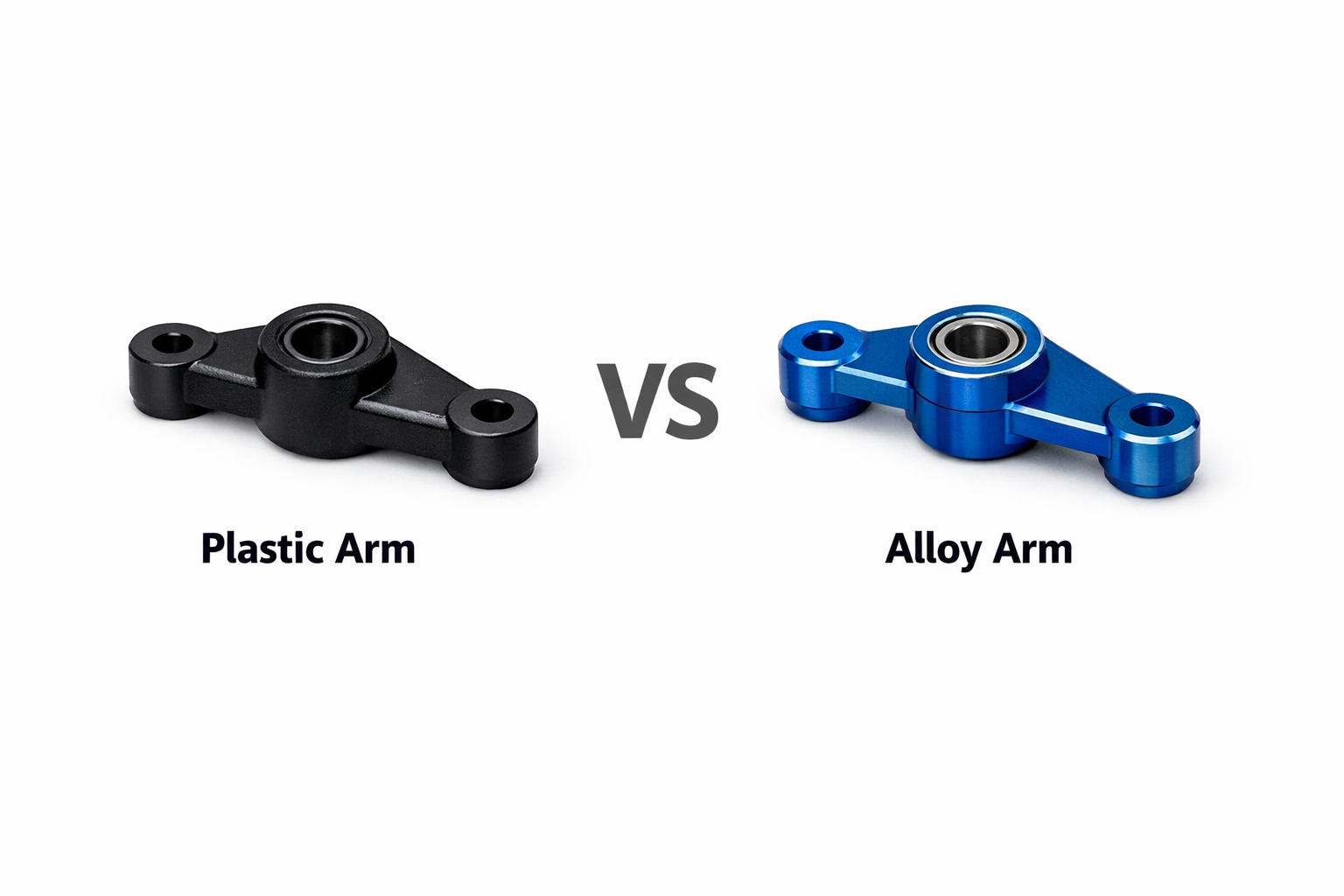
Upgrading to alloy steering arms and a stronger servo saver makes a dramatic difference to how precise and responsive your RC car feels. The stock plastic steering components on many Tamiya chassis — especially the TT‑02 — flex under load.
When you turn sharply, accelerate hard, or run grippy tyres, the plastic bends instead of transferring the full movement to the wheels. This creates slop, vague steering, and delayed response.
Electronics
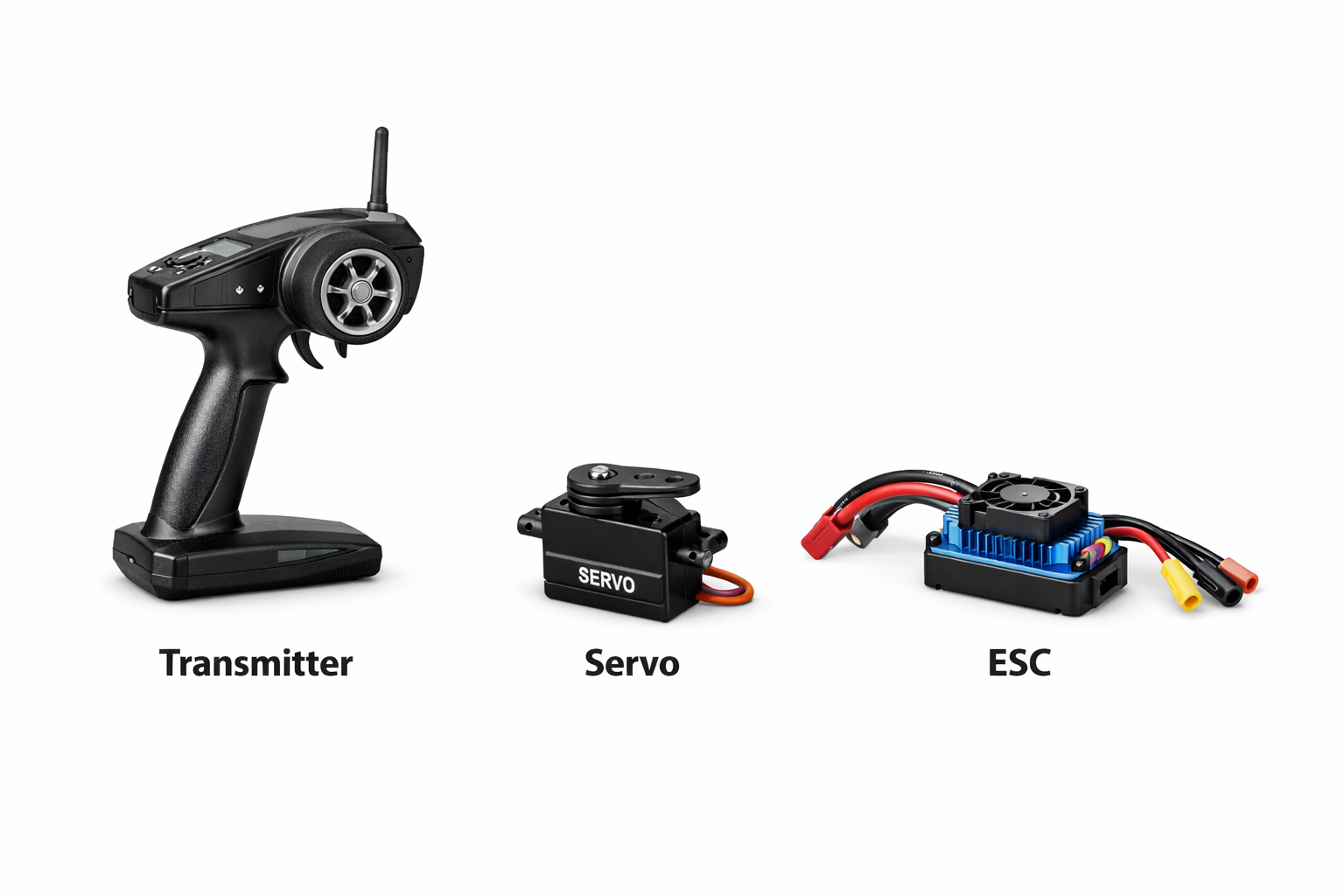
Electronics upgrades have a bigger impact on control and driving feel than almost any mechanical change. They determine how precisely the car responds to your inputs, how smoothly power is delivered, and how confidently the car behaves at speed.
Even on a completely stock chassis, good electronics can make the car feel sharper, calmer, and far easier to drive consistently.
Cost Ranges
- Entry upgrades: £20–50 (Bearings, basic servo, steel pinion)
- Mid upgrades: £50–100 (Oil shocks, better tyres, alloy steering)
- Full race prep: £150+ (High‑end servo, transmitter, full electronics refresh)
Upgrading the fundamentals transforms how any Tamiya chassis drives. Bearings, oil shocks, the right tyres, precise steering, and solid electronics deliver more consistency, more control, and more enjoyment on every run. Start with the essentials, build confidence, and add refinements as your driving develops. Small changes make a big difference