Optimised for UK astro‑turf tracks — high grip, high load, high precision.
Astro‑Turf Overview
Astro is unique: high initial bite, high rolling resistance, and sudden traction spikes. Your setup must deliver stability, controlled rotation, and predictable landings.
Key goals:
- Reduce traction roll
- Maintain corner stability
- Control weight transfer over bumps
- Maximise forward drive without binding the car
Ride Height & Droop
Ride Height
- Front: 17–19 mm
- Rear: 19–21 mm
- Lower for high‑grip astro, higher for bumpy astro
Droop
- Front: medium droop — keeps nose planted
- Rear: short‑medium droop — reduces chassis pitch and traction roll
Behaviour Targets
- Car should land flat and settle quickly
- No excessive chassis roll entering high‑grip corners
- Maintain stability through rhythm sections
Tyres & Inserts
Tyres (UK Astro Standards)
- Schumacher Mezzo (dry, high grip)
- Schumacher Dart (universal baseline)
- Schumacher Mini Pin / Mini Spike (older astro, loose sections)
Inserts
- Medium density for consistency
- Firm only on ultra‑high‑grip tracks
- Avoid soft inserts — too much tyre deformation
Tyre Prep
- Light scrub‑in only
- No aggressive additive — astro doesn’t need it
- Maintain consistent tyre temperature
Damping & Springs
Shock Oil
- Front: 32.5–35 wt
- Rear: 30–32.5 wt
- Increase 2.5 wt for hot weather or high‑grip astro
Springs
- Front: medium‑firm
- Rear: medium
- Too soft = traction roll
- Too firm = loss of bump absorption
Pistons
- 2‑hole or 3‑hole depending on track roughness
- Smaller holes = more pack = better landing control
Camber, Toe & Geometry
Camber
- Front: –1.5°
- Rear: –2°
- More rear camber helps stability on high‑bite astro
- Ensure camber gain under compression remains balanced to prevent mid‑corner grip spikes on astro
- Keep lateral tyre load predictable so the buggy doesn’t snap‑bite when transitioning into high‑grip sections
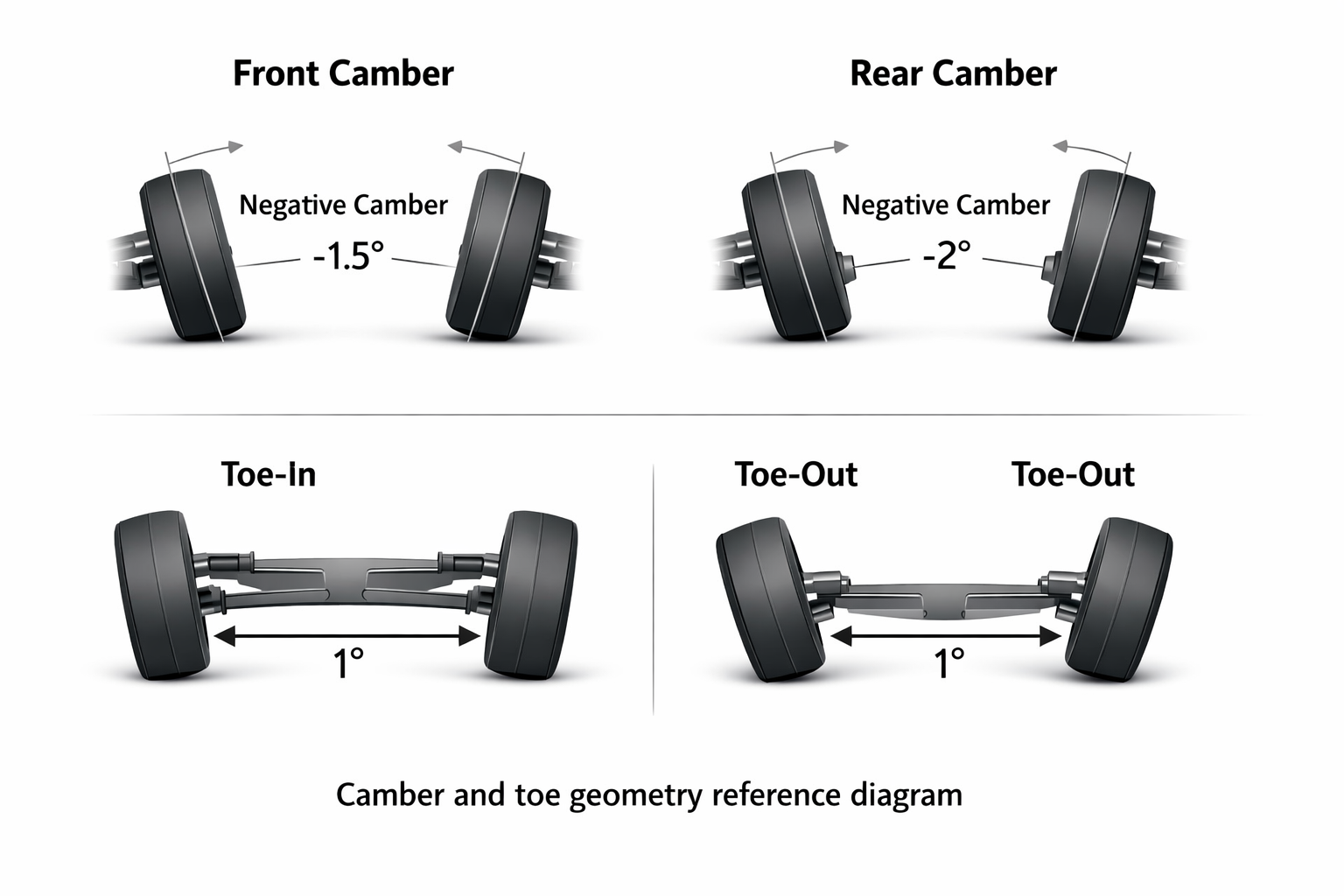
Toe
- Front: 0.5–1° toe‑out
- Rear: 2–3° toe‑in for stability and forward drive
Caster
- 20–25°
- More caster = smoother steering on high‑grip astro
Roll Centres
- Front: lower roll centre for stability
- Rear: medium roll centre for rotation without traction roll
RC Motor & Power System Guide
Differentials (2WD & 4WD)
2WD Buggy
- Ball diff: tight but smooth
- Gear diff: 5–7k for stability and forward drive
- Ensure rear diff allows controlled rotation without unloading on corner exit
4WD Buggy
- Front: 7–10k for steering stability
- Centre: 5–7k for balanced power
- Rear: 3–5k for rotation
- Ensure diff viscosities work together so front bite doesn’t overpower rear rotation on astro
Anti‑Roll Bars (4WD)
- Front: light bar for stability
- Rear: optional — only if traction roll persists
- Bars reduce chassis roll and improve consistency
Upgrades Guide
Weight Distribution & Chassis Balance
- Keep weight low and central
- Add 10–20 g near the rear gearbox if rear traction is inconsistent
- Ensure battery is firmly secured — movement destabilises landings
- Avoid front‑heavy setups — causes nose‑diving on jumps
Wing & Aero
- High‑downforce rear wing
- Side‑dams recommended for stability
- Front wing (2WD): optional but helps steering consistency
- Trim wing height depending on jump stability
Driving Technique Tips
- Smooth steering inputs — astro punishes aggression
- Brake early before high‑bite corners
- Avoid mid‑corner throttle spikes
- Let the car settle before accelerating
- Prioritise consistency over outright speed